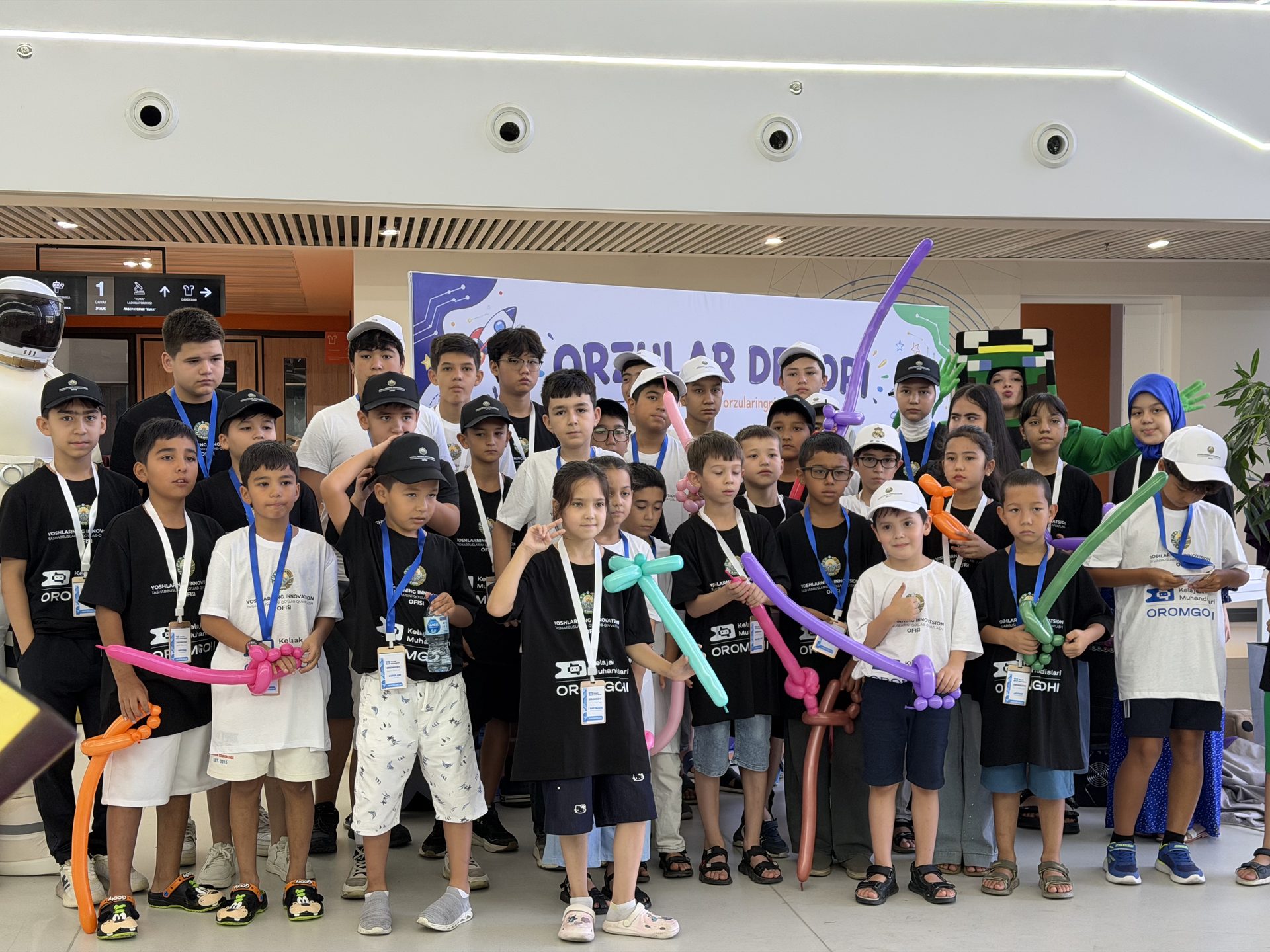
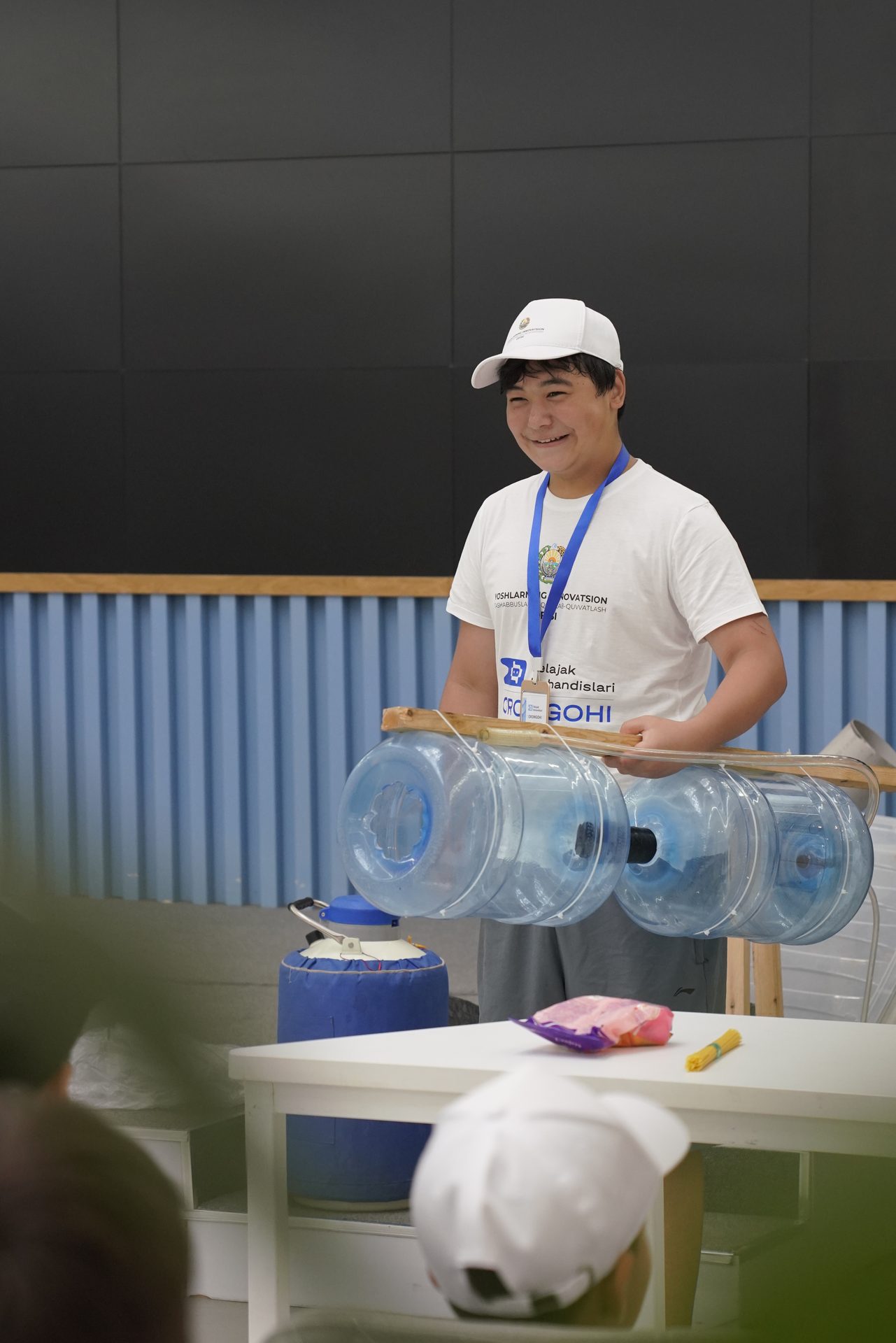
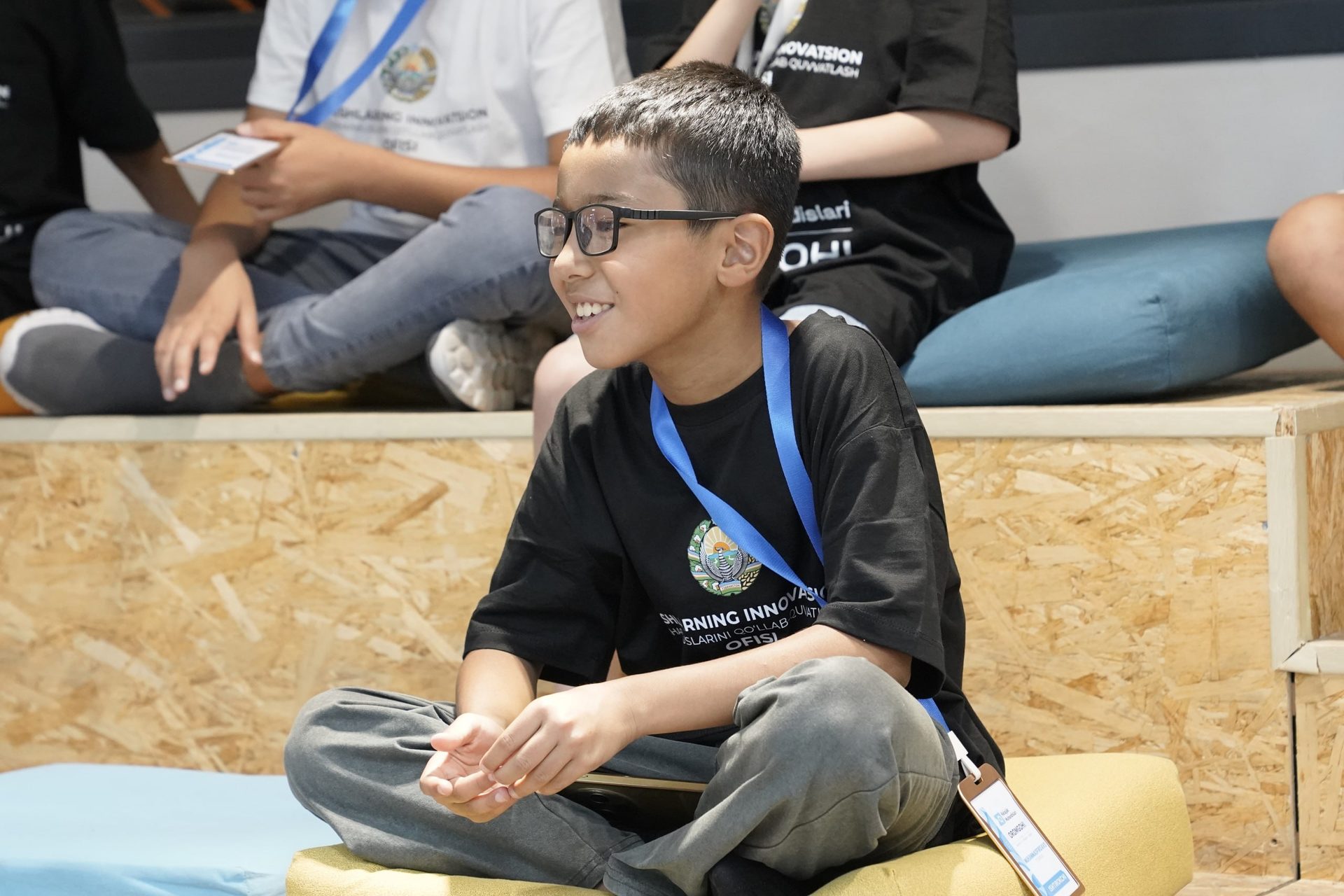
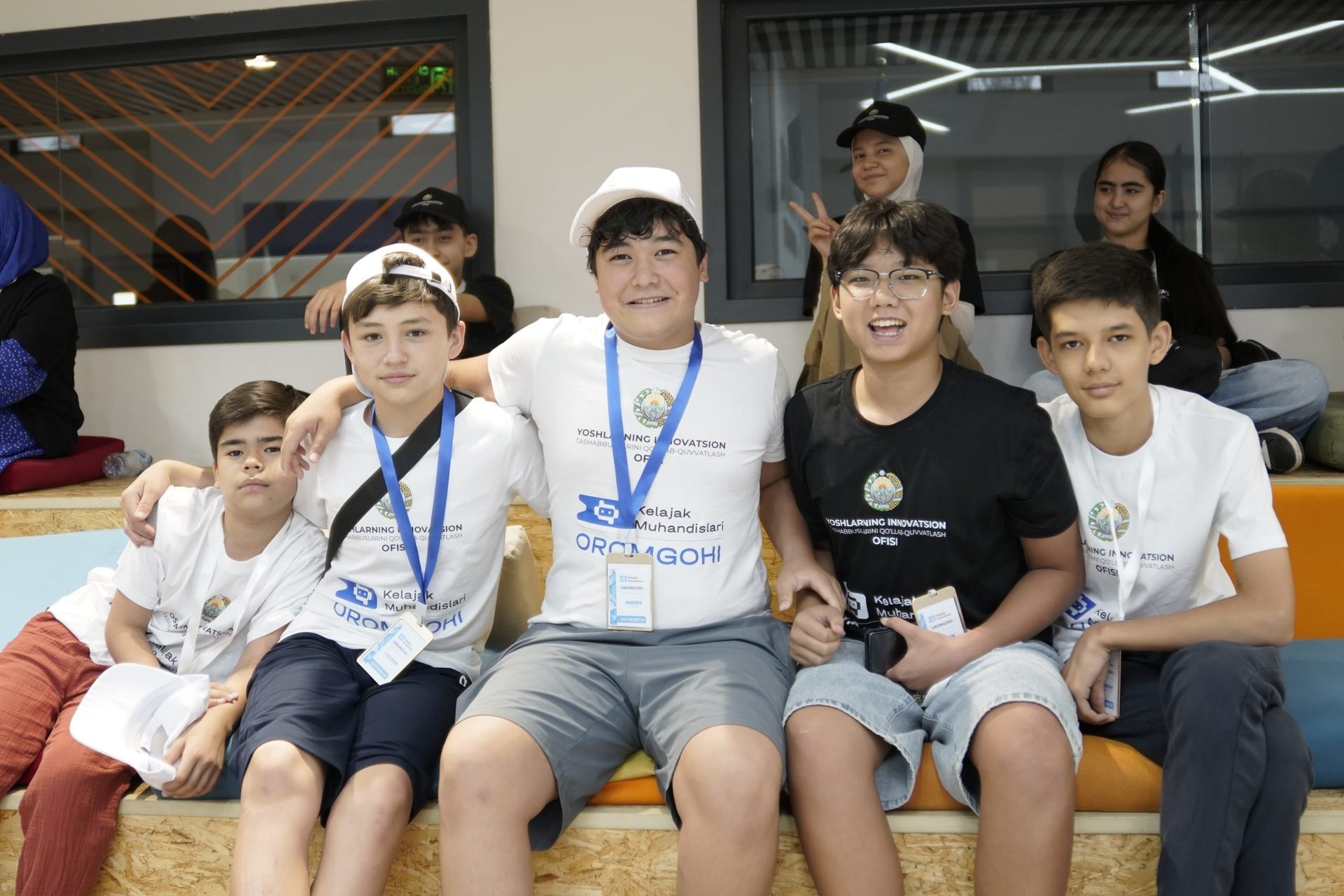
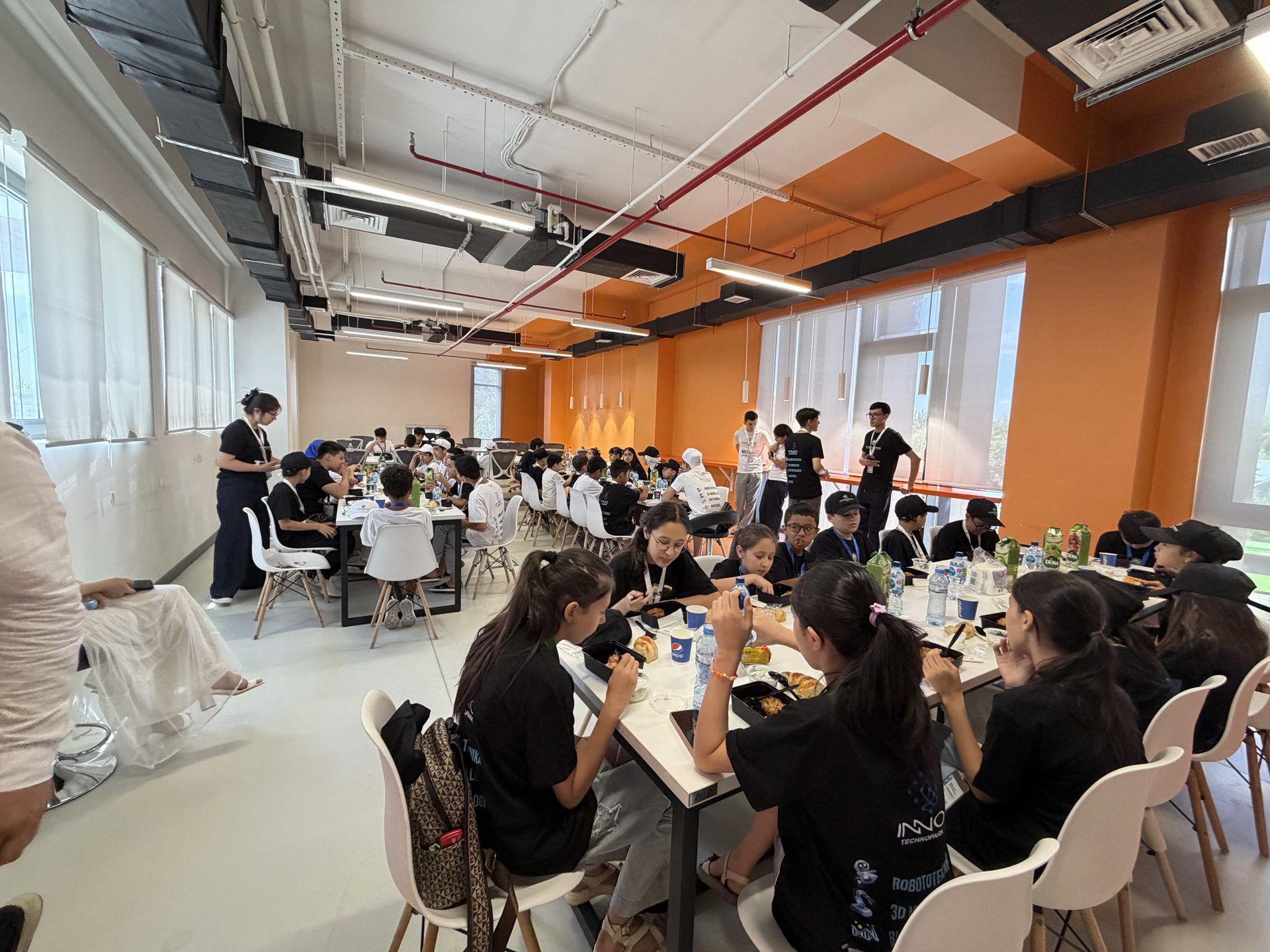
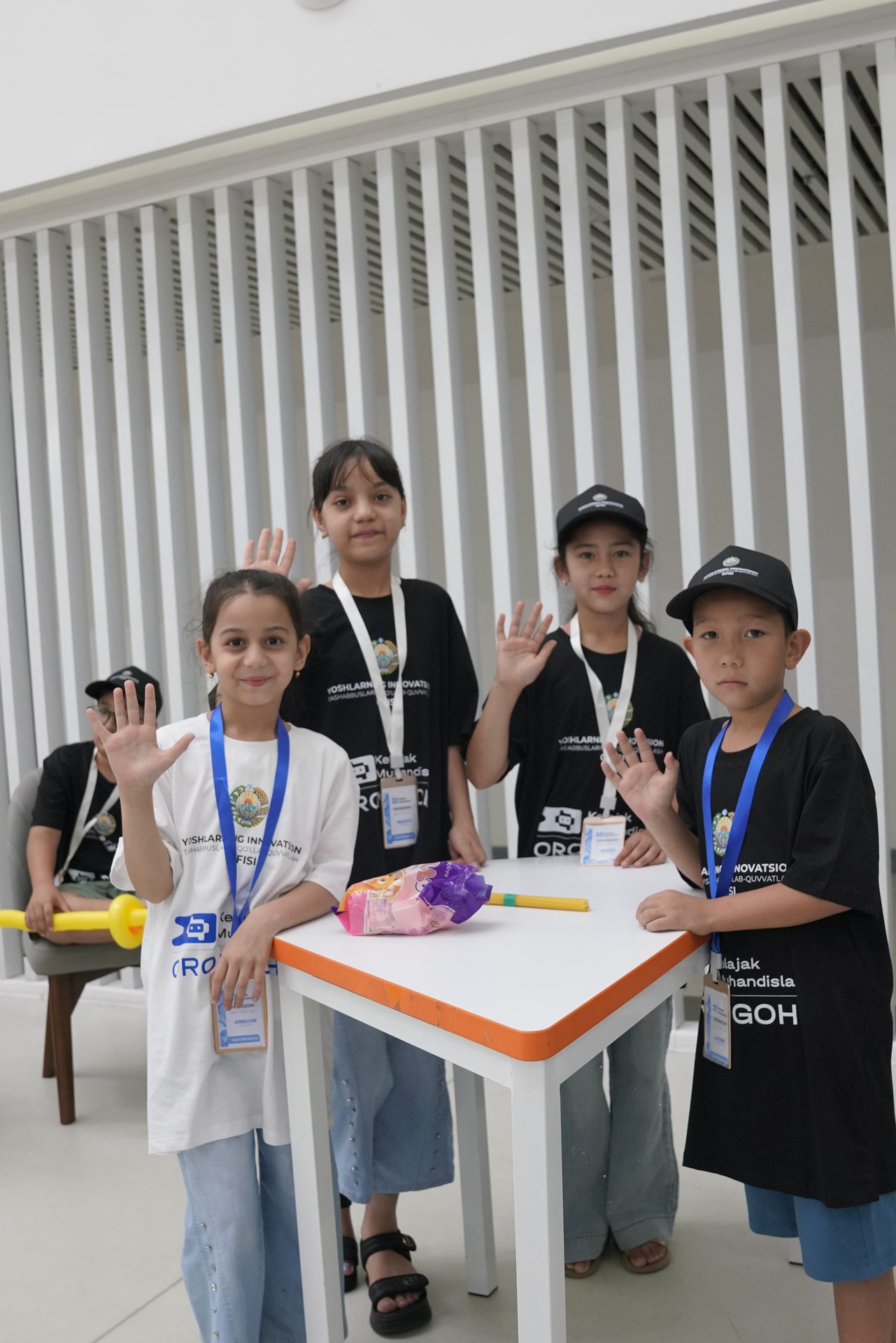
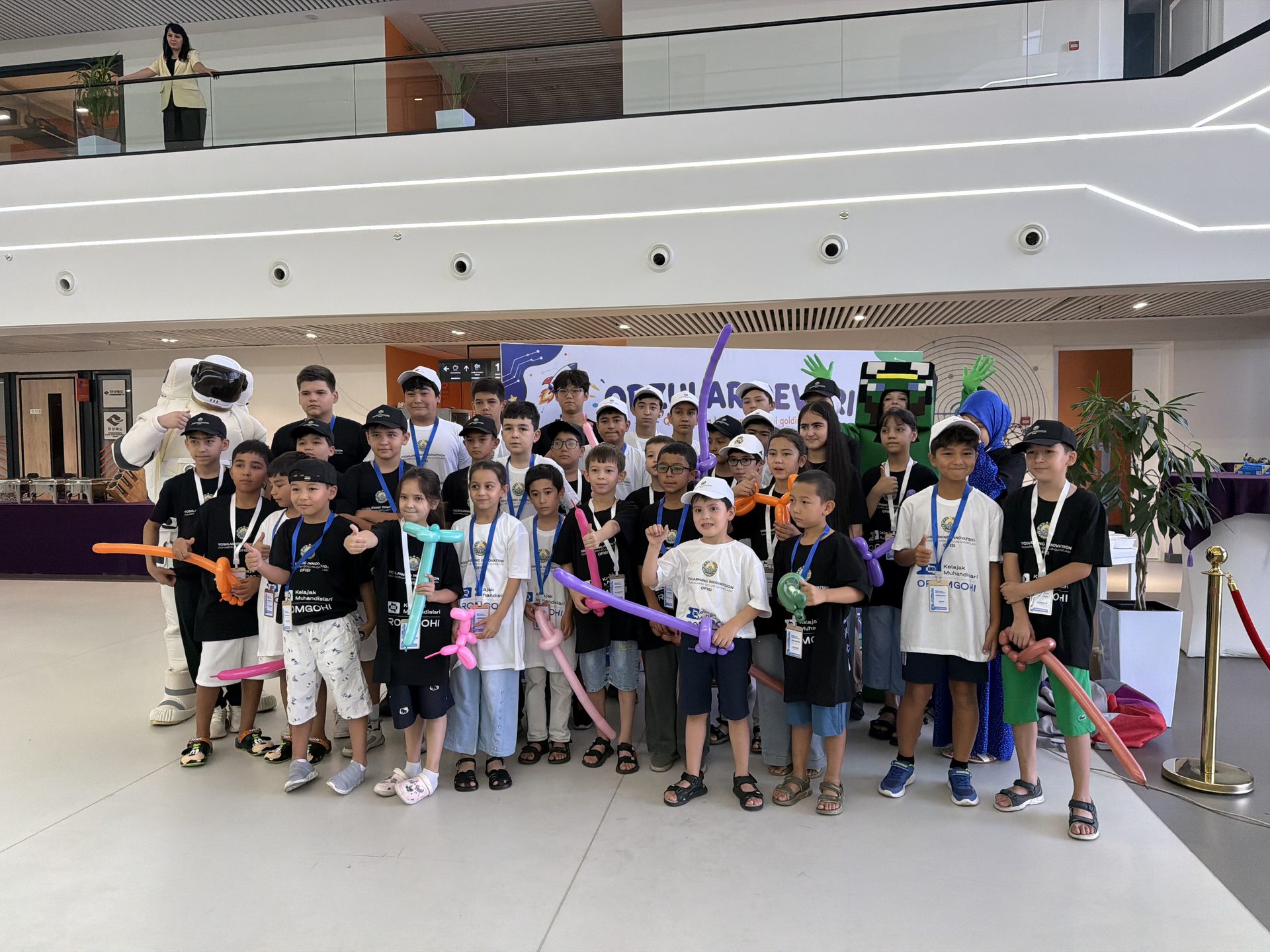
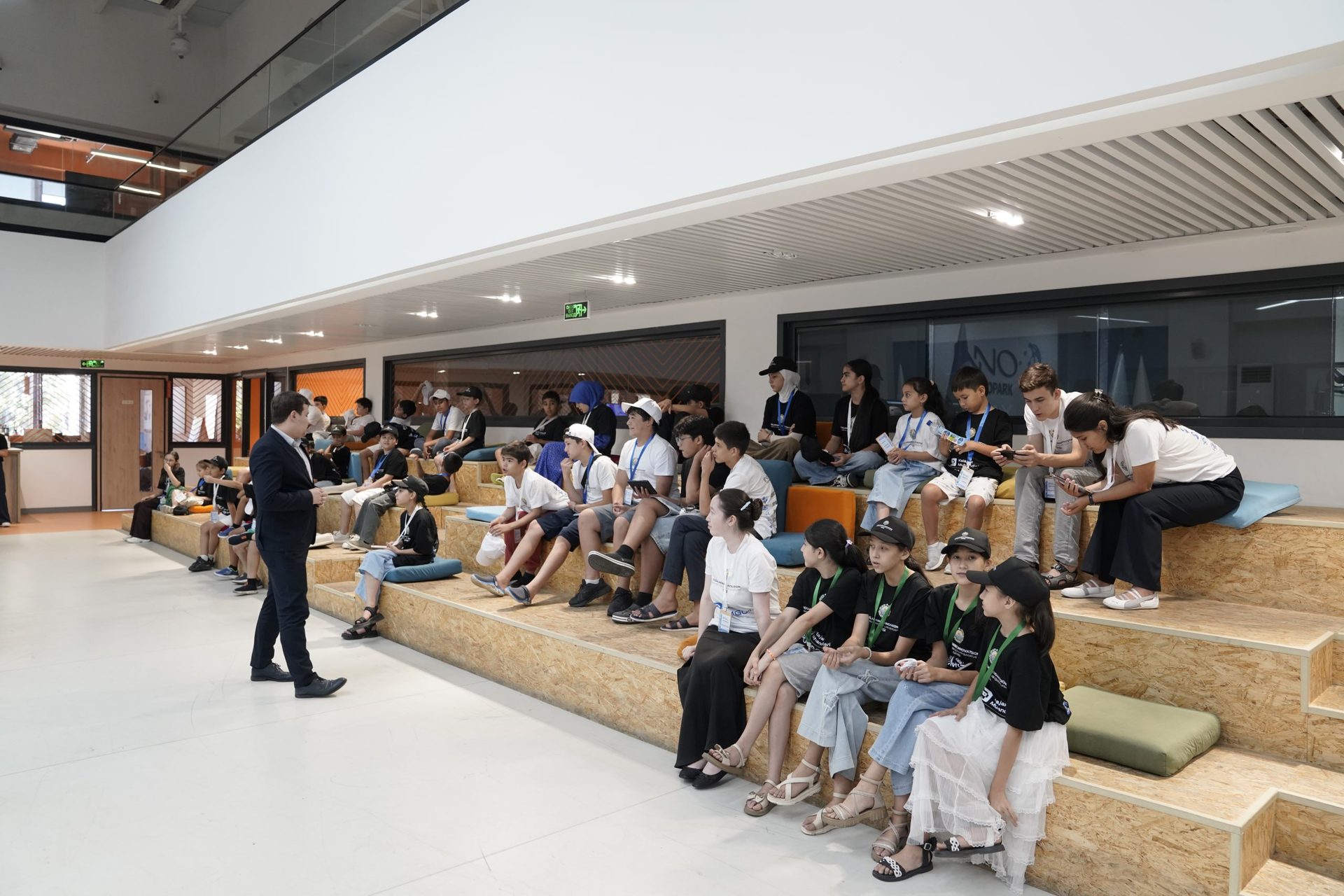
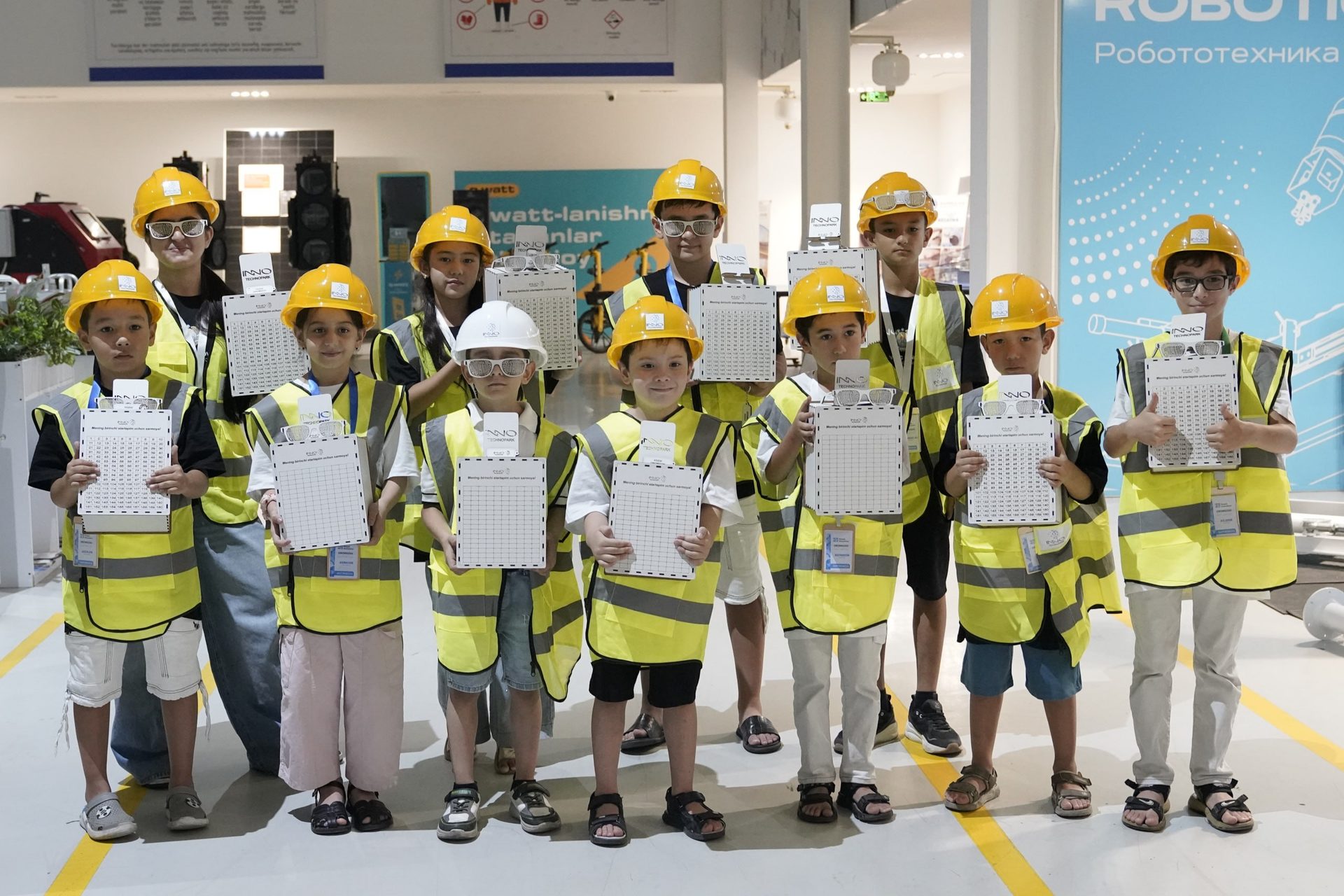
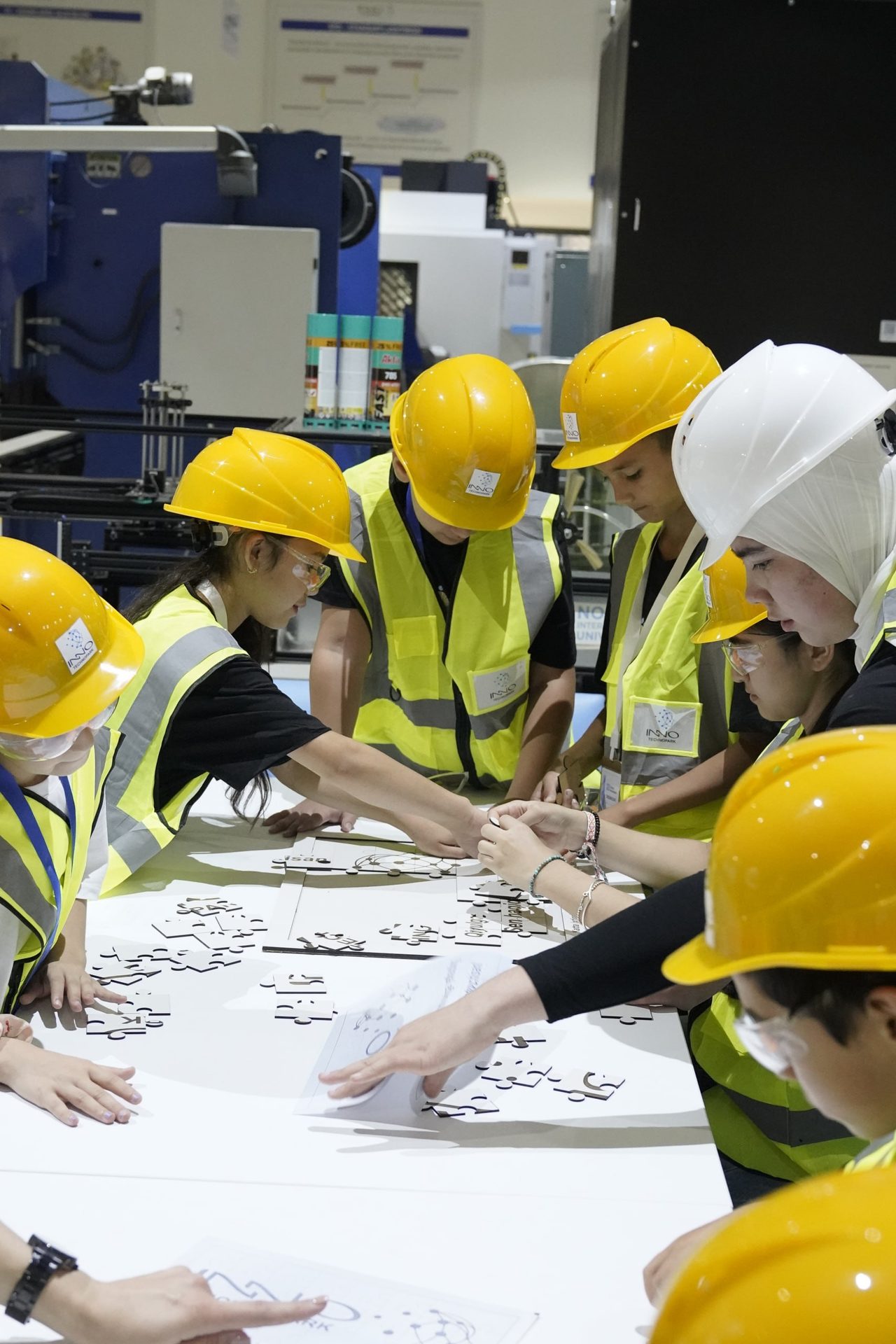
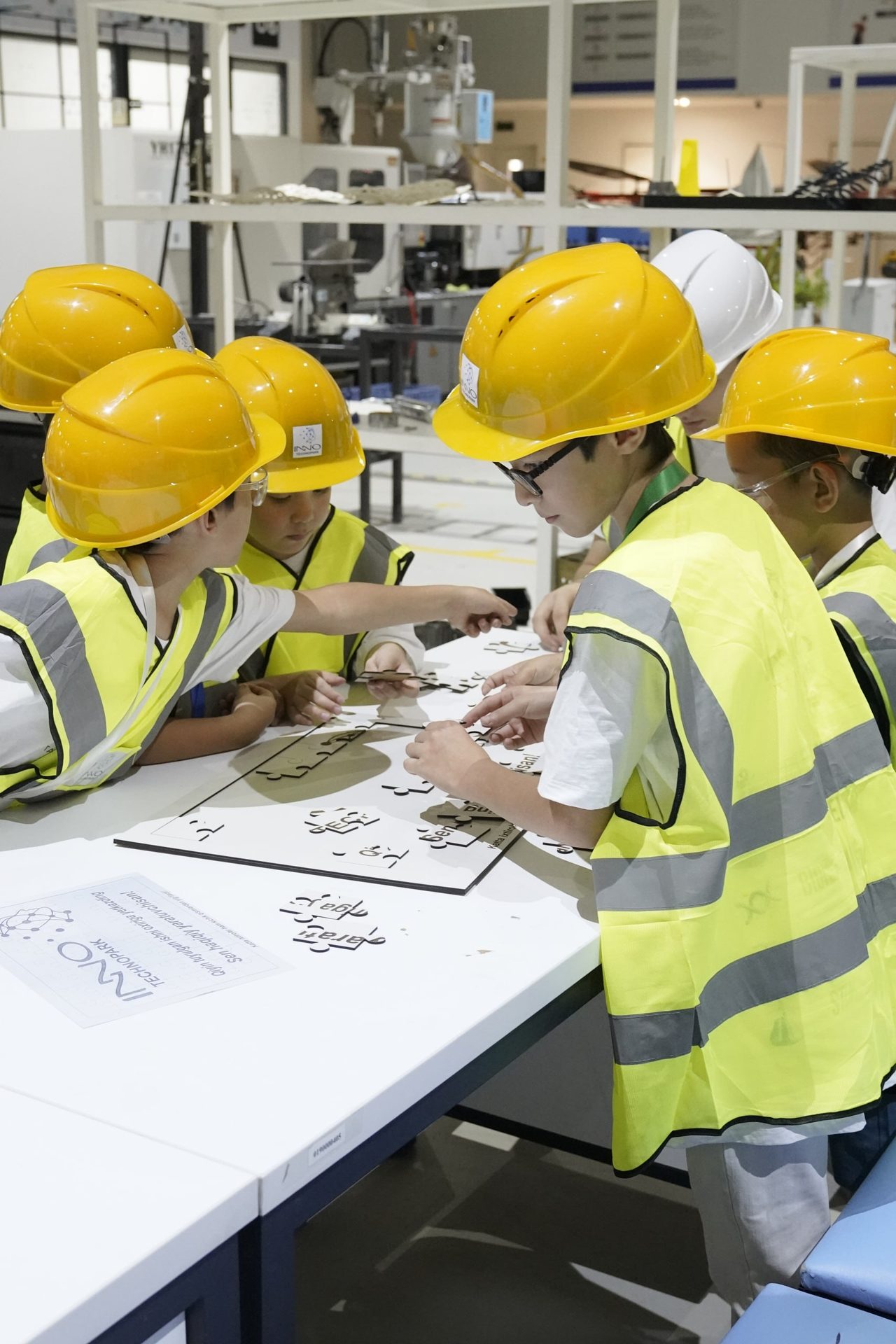
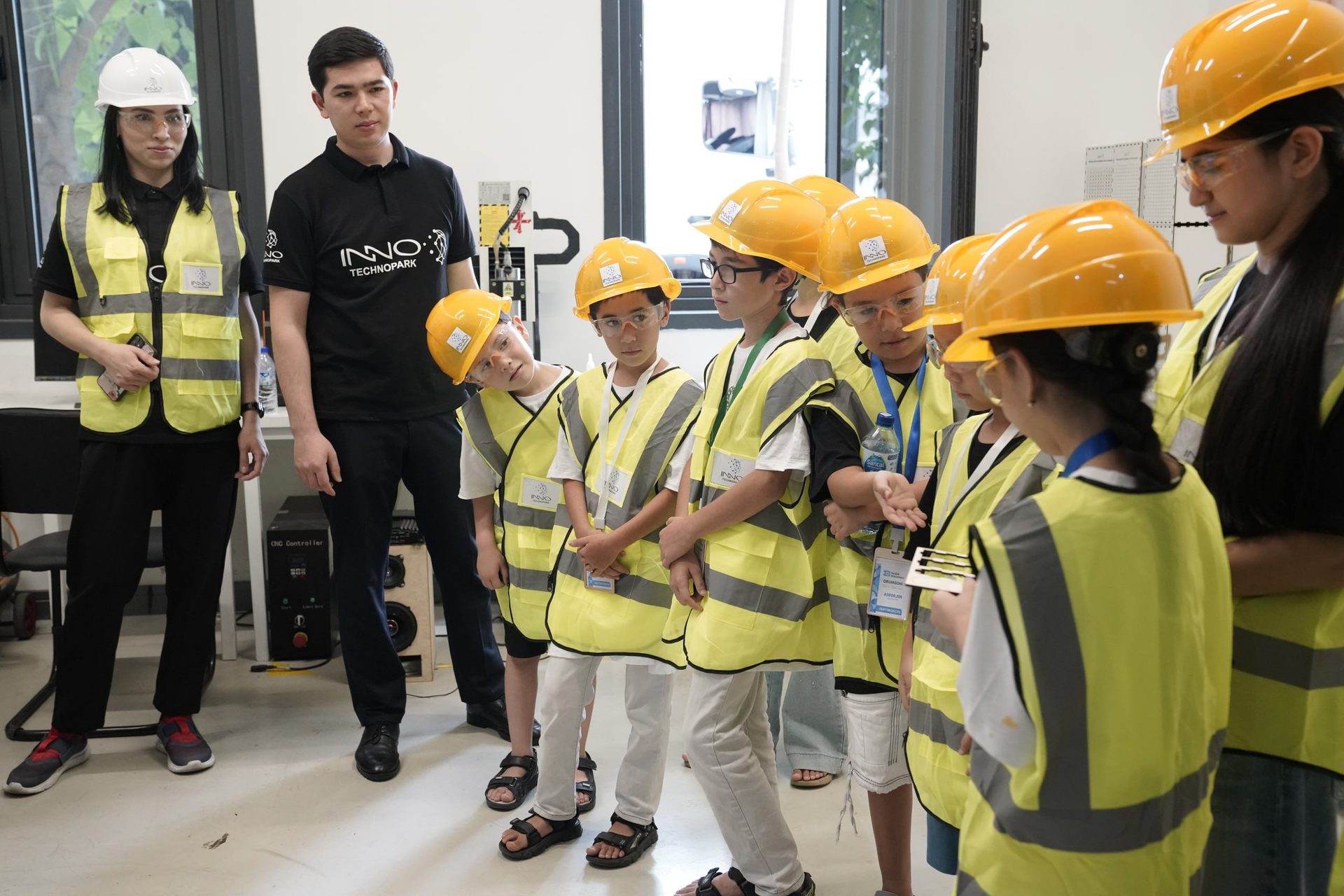
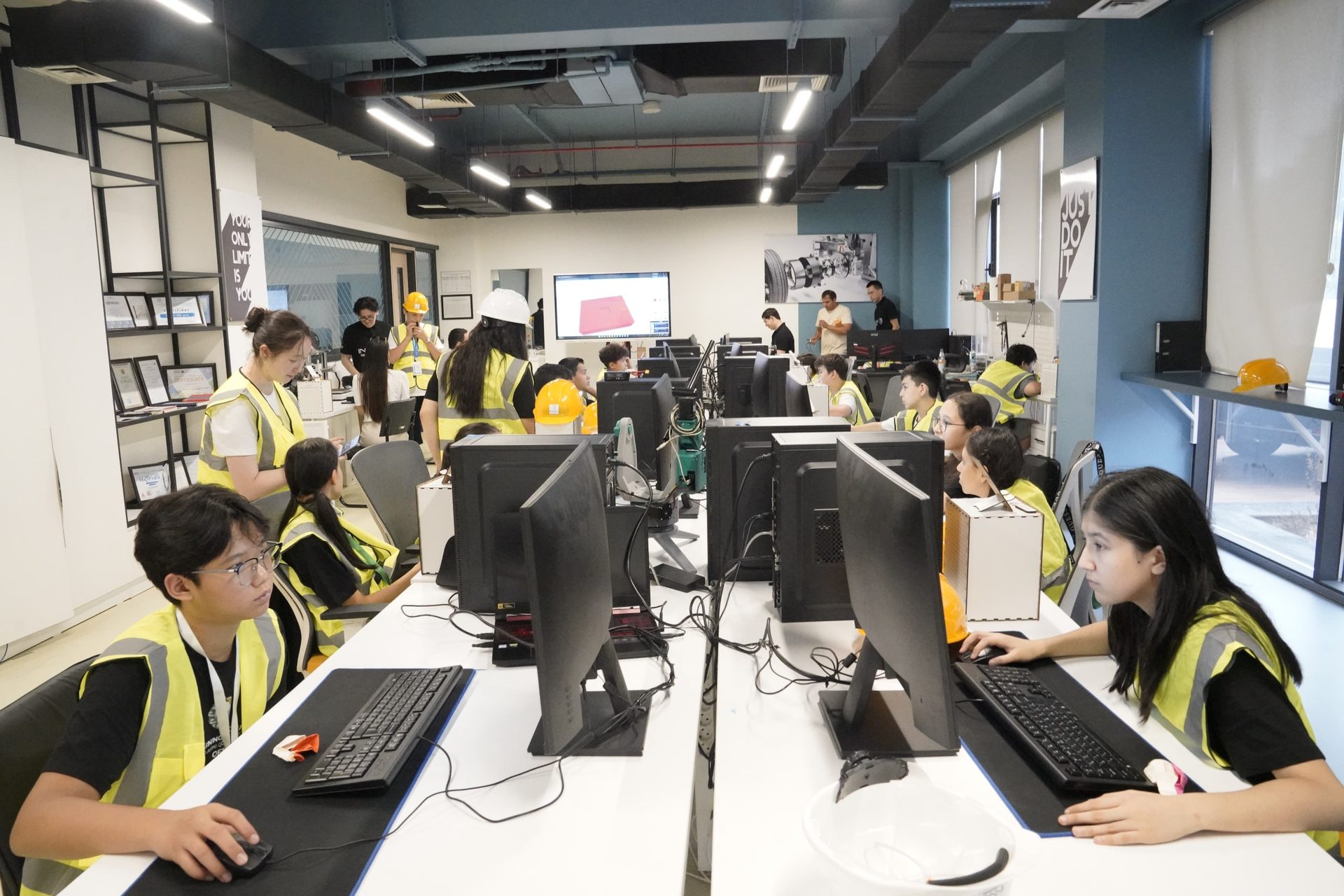
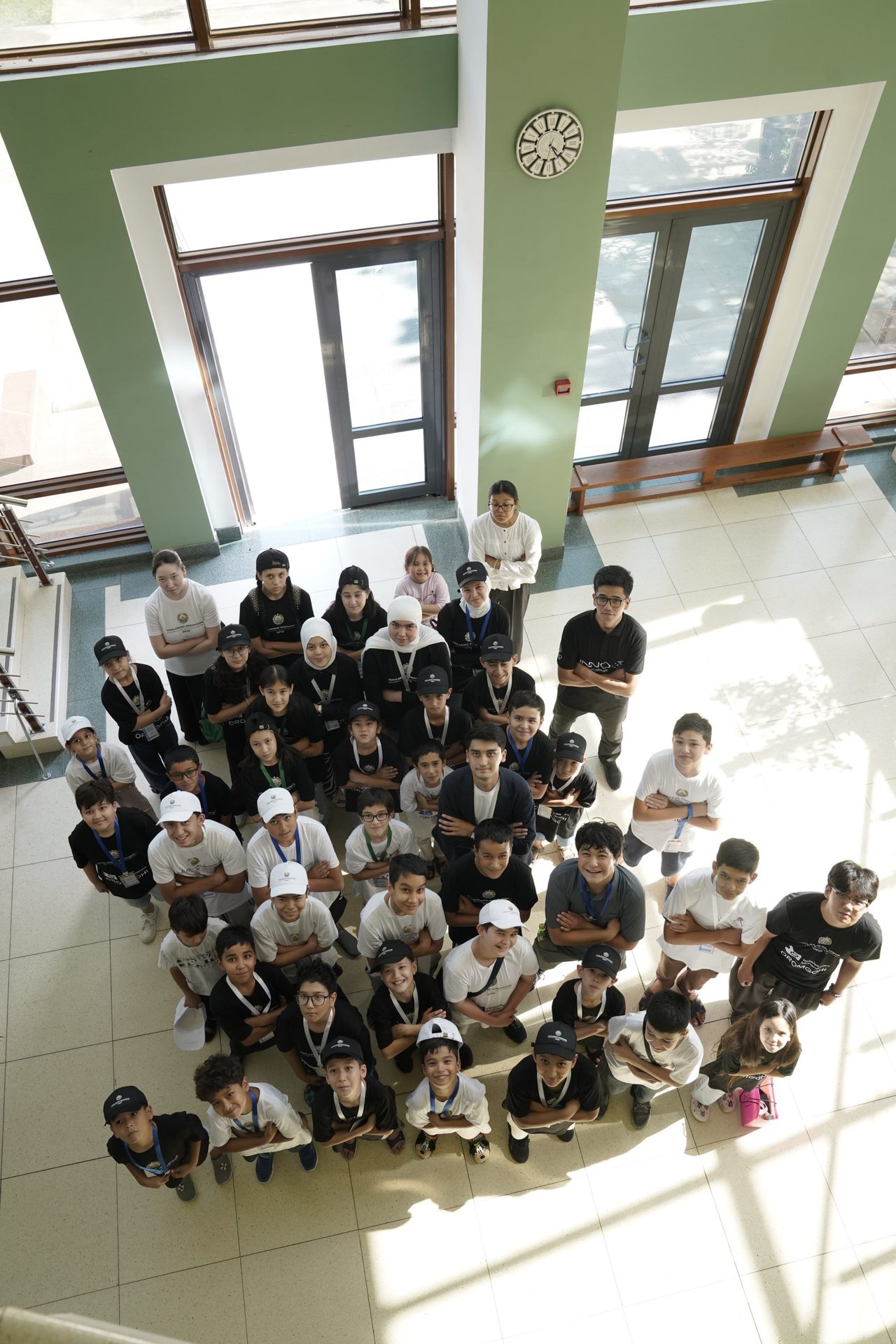
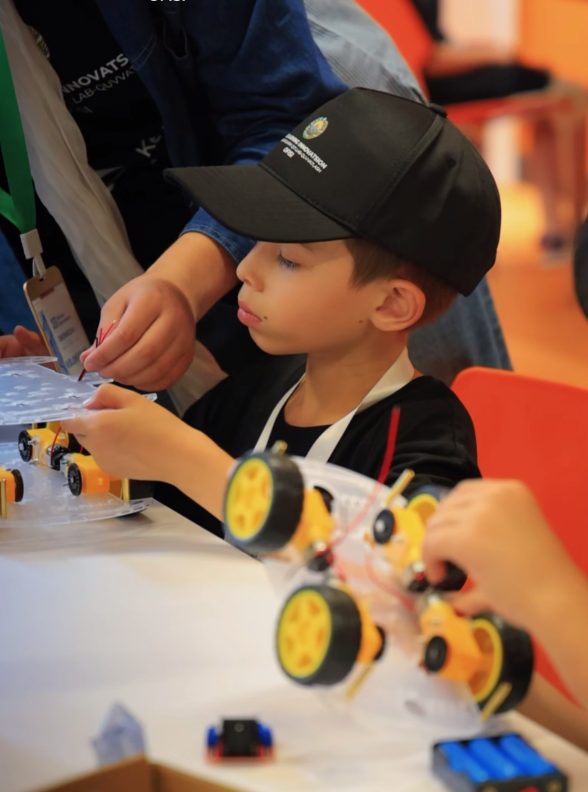
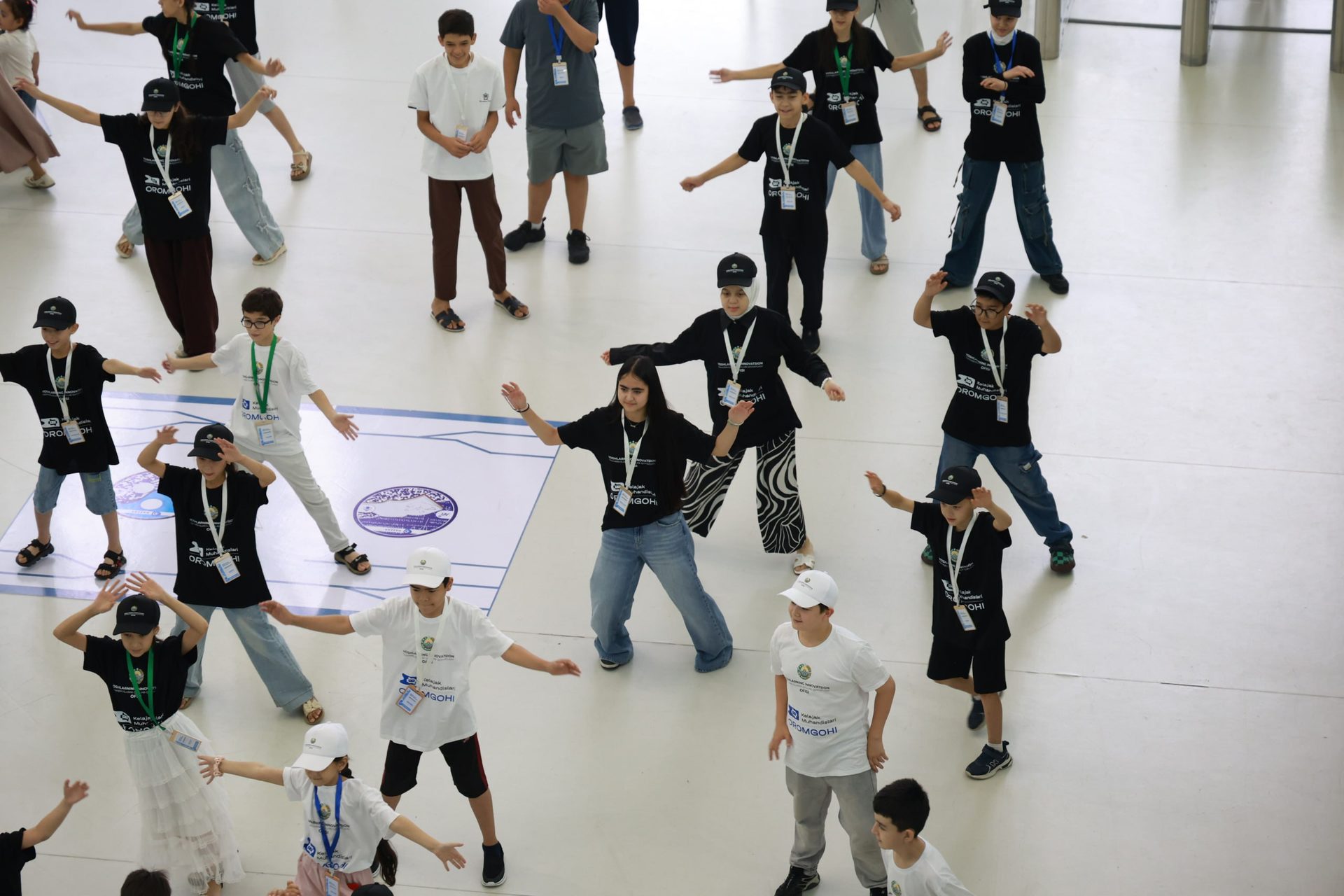
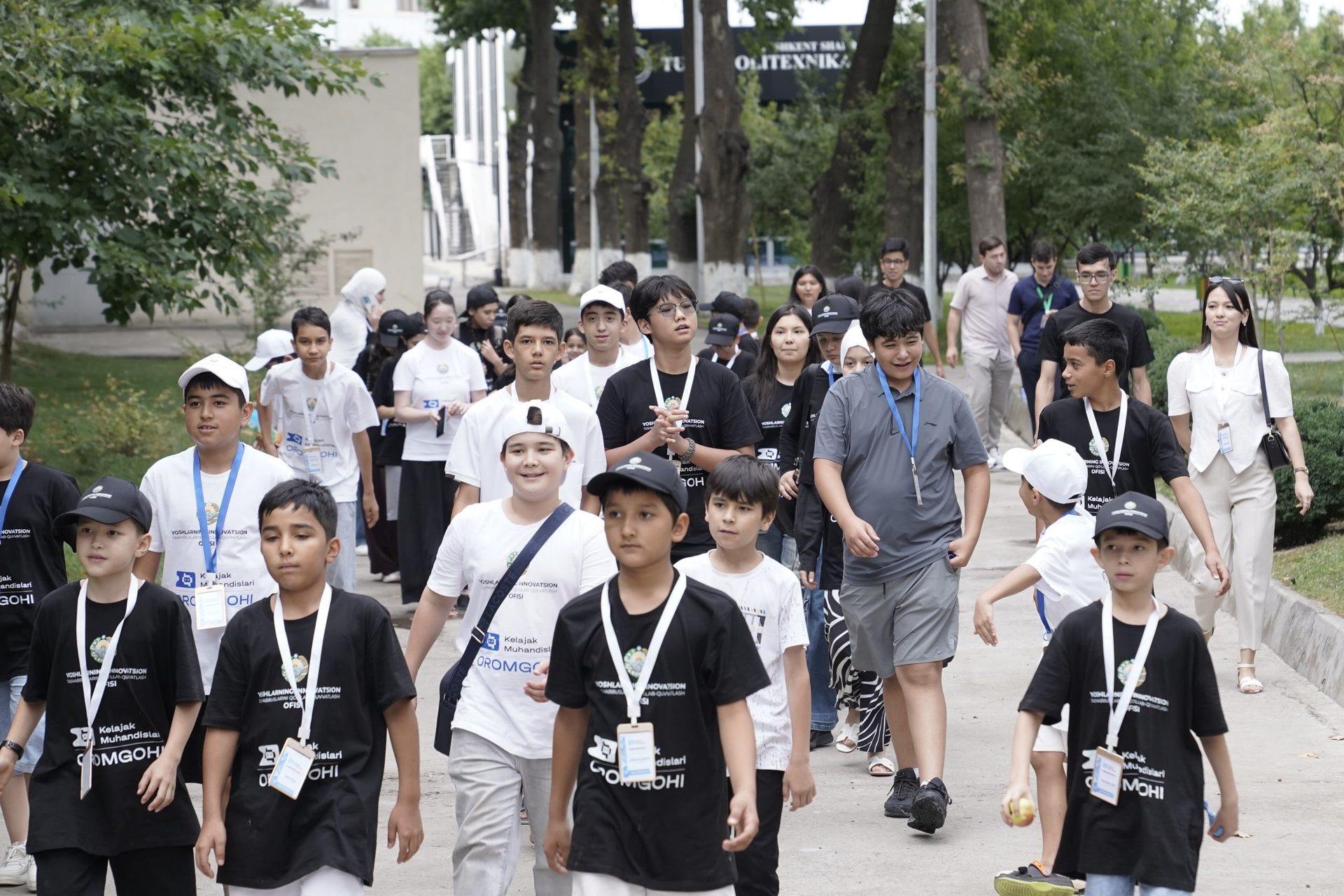
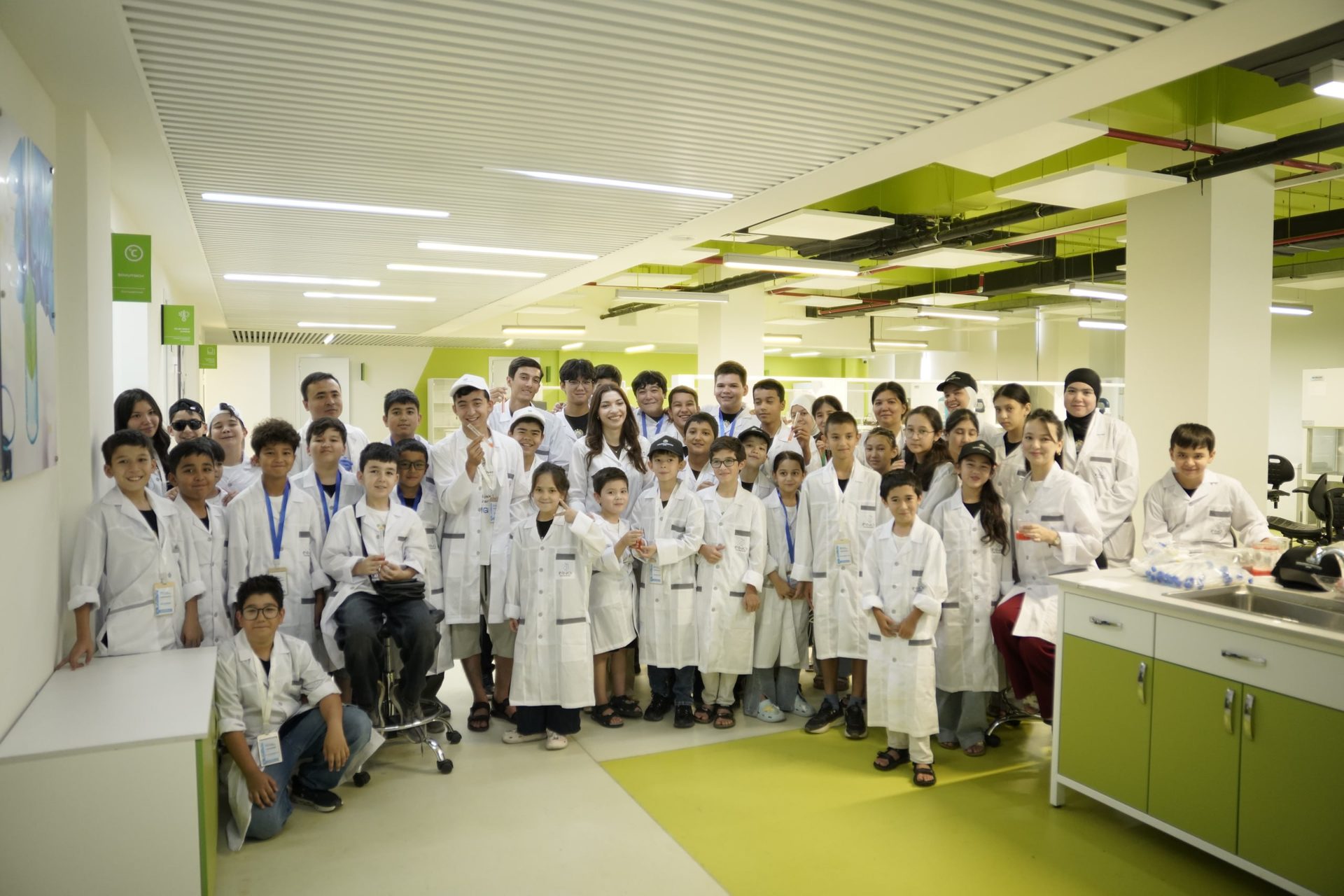
The “Engineers of the Future” summer camp introduces schoolchildren to engineering, technology and science from an early age. Over four days, 40 children worked in real labs: they built robots, designed 3D models, extracted DNA and flew drones.
Dates1–4 July 2026
VenueINNO technopark, Tashkent
ParticipantsChildren aged 10–15
Daily hours09:00 – 18:30
Format2 groups × 20
The camp blends theory with hands-on practice, team competitions and inspiring shows. Each day is devoted to one technology, and classes are led by industry experts — the mentors.
Participants were selected from general schools across the country based on their interest in science, technical creativity and initiative. For practice they were split into two groups of 20, and into teams of 10 in the labs.
Camp objectives
01
Spark interest in STEM — science, technology, engineering and maths
02
Build hands-on skills in robotics and programming
03
Introduce 3D modelling, laser cutting and digital fabrication
04
Develop an interest in biotechnology and a lab culture
05
Teach the basics of aviation and drone technologies
06
Identify gifted children and guide them to further education and innovation programmes
How it was organised
Stage I
Selection
Criteria were announced and 40 gifted schoolchildren were selected.
Stage II
Preparation
A team of mentors and volunteers was formed; labs and equipment were prepared.
Stage III
Intensive programme
Four days of master classes, practice, competitions and visits.
Stage IV
Closing and awards
Every participant received a certificate and souvenirs.
02Programme
Four days, four worlds of technology
Mornings for safety and theory, the day for practice, evenings for a competition or a visit. And home with something made by hand — plus a new challenge.
01day
1 July, Wednesday
Robotics day
Introductions, the opening ceremony and the first robots — this is how the camp began.
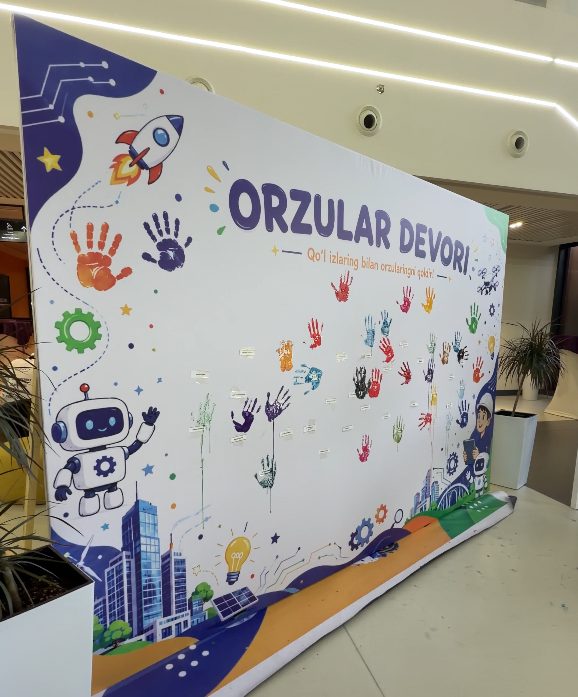
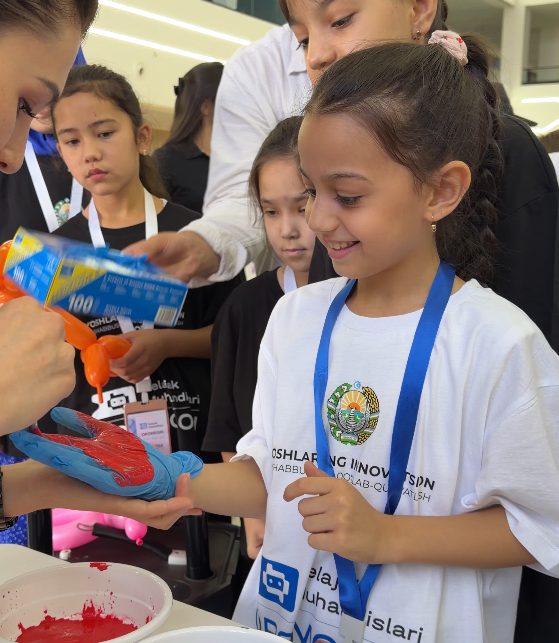
Welcome and the “Wall of Dreams”
Registration, camp uniform, introductions and a meeting with parents.
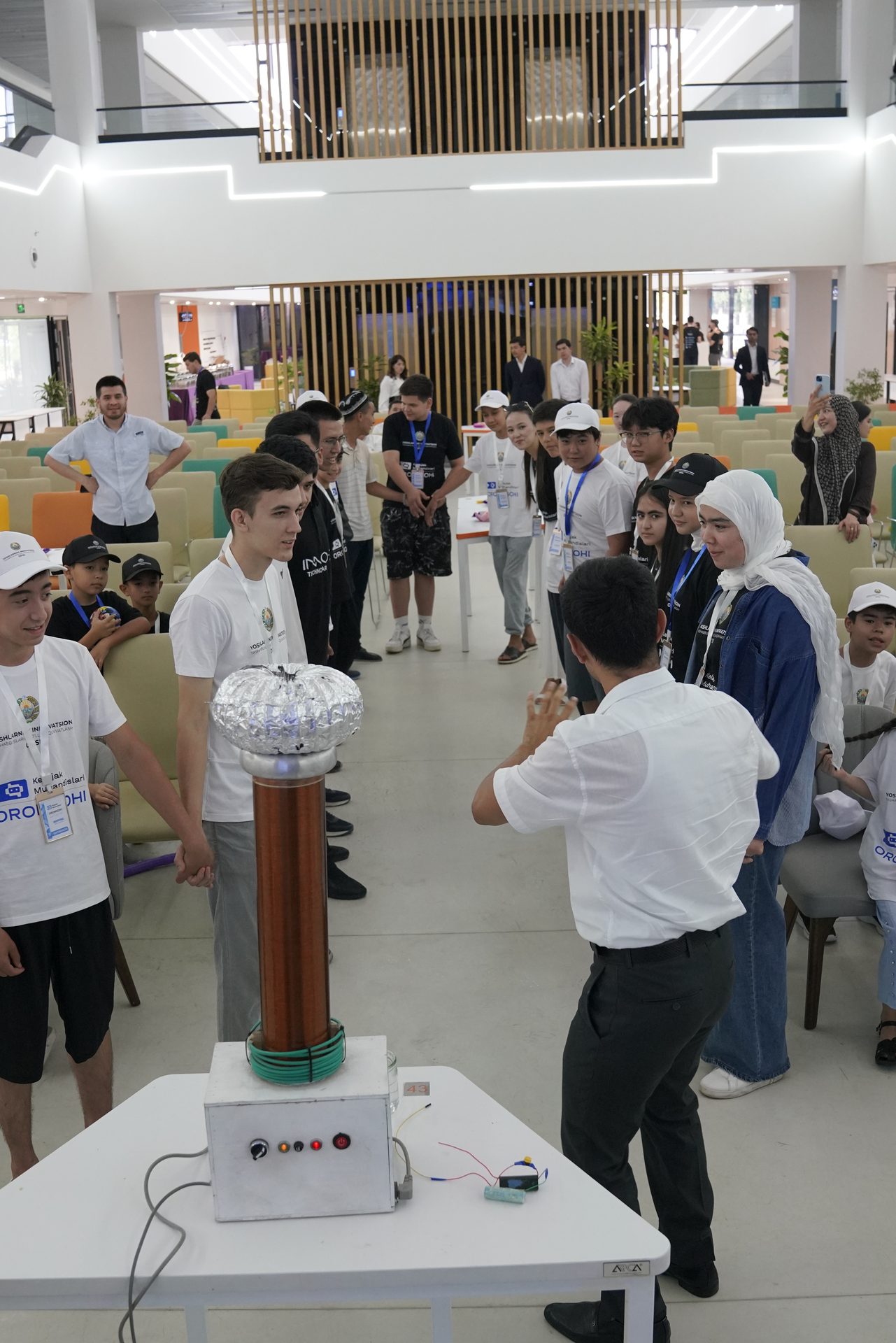
Opening ceremony and Physics show
The camp was launched with spectacular physics experiments.
Robotics and LEGO Robo
Two groups: building robots, working with sensors and coding basics.
Using AI wisely
A hands-on session with artificial intelligence tools.
Movie time
“The Boy Who Harnessed the Wind” — an inspiring film about invention.
02day
2 July, Thursday
3D modelling and laser technologies day
Digital fabrication: from idea to drawing, from drawing to a finished object.
Warm-up and safety briefing
Rules for working with 3D printers and laser equipment.
3D modelling and laser cutting
On the production floor, groups of 10 rotated every hour.
LEGO Robo
The second group continued robotics; the groups swapped after lunch.
Visit to Turin Polytechnic University
A look at the university labs and student life.
03day
3 July, Friday
Biotechnology and science day
In lab coats — meeting the code of life; in the evening — a robot battle.
Intro talk on DNA
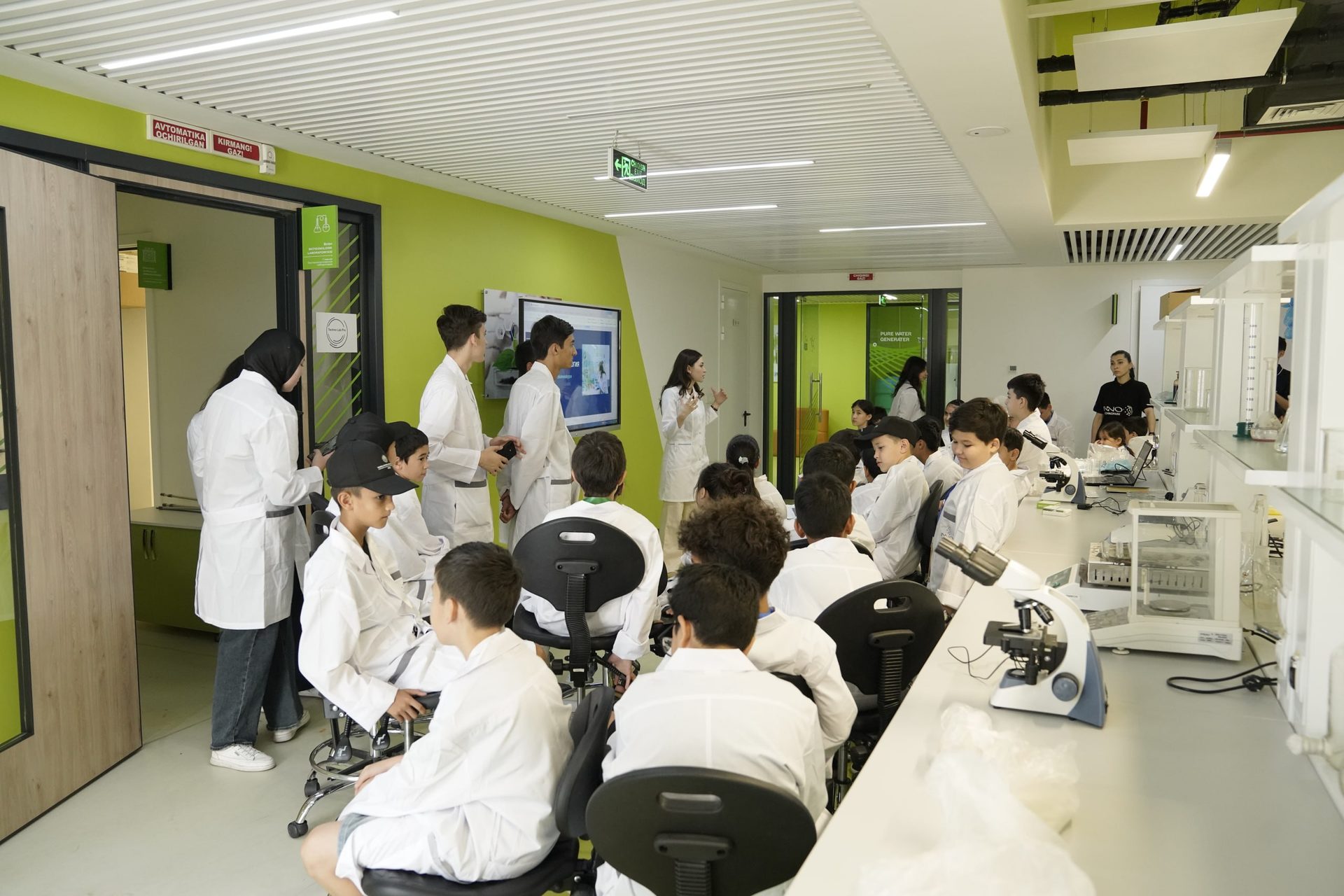
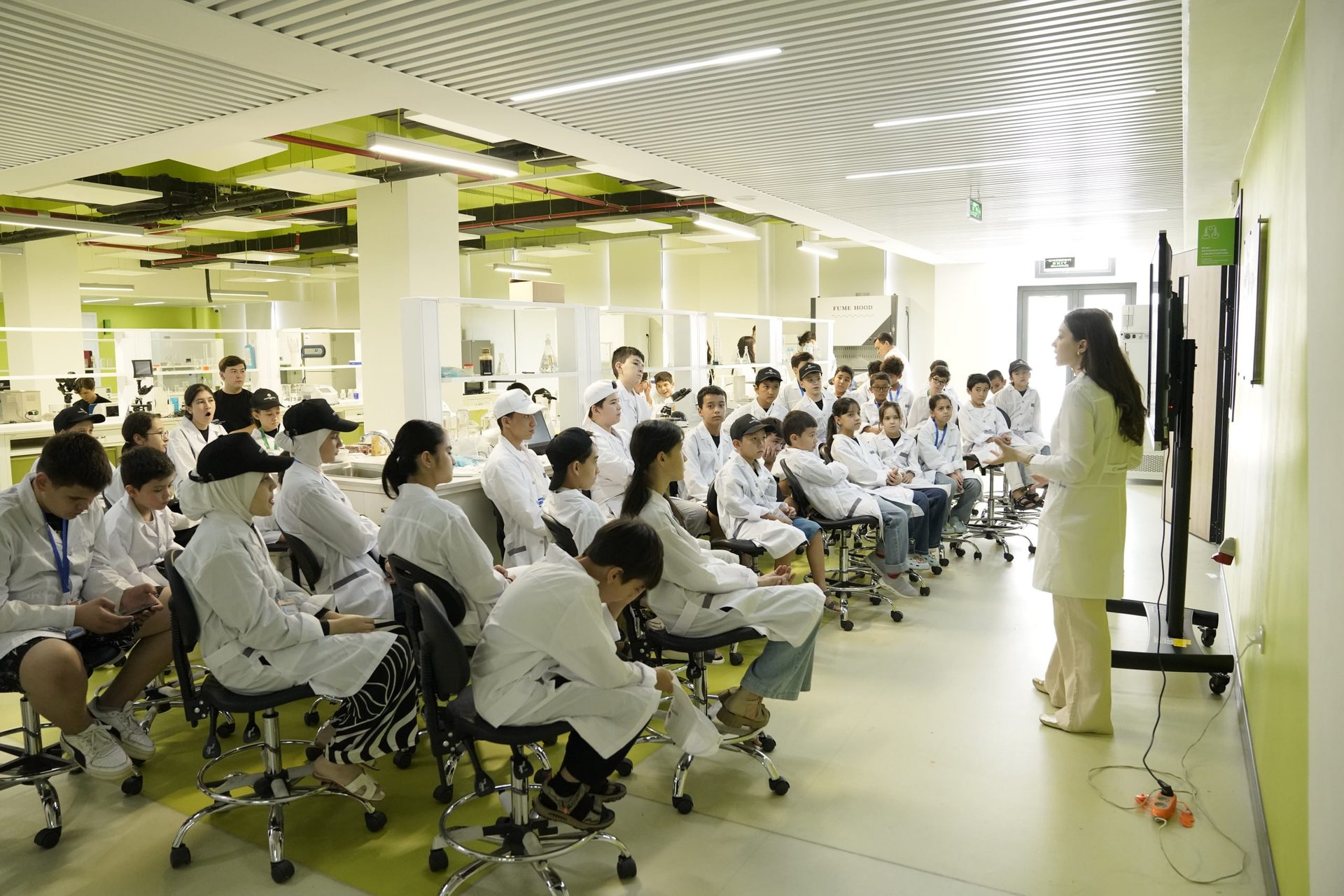
Lab safety and a short talk about the code of life.
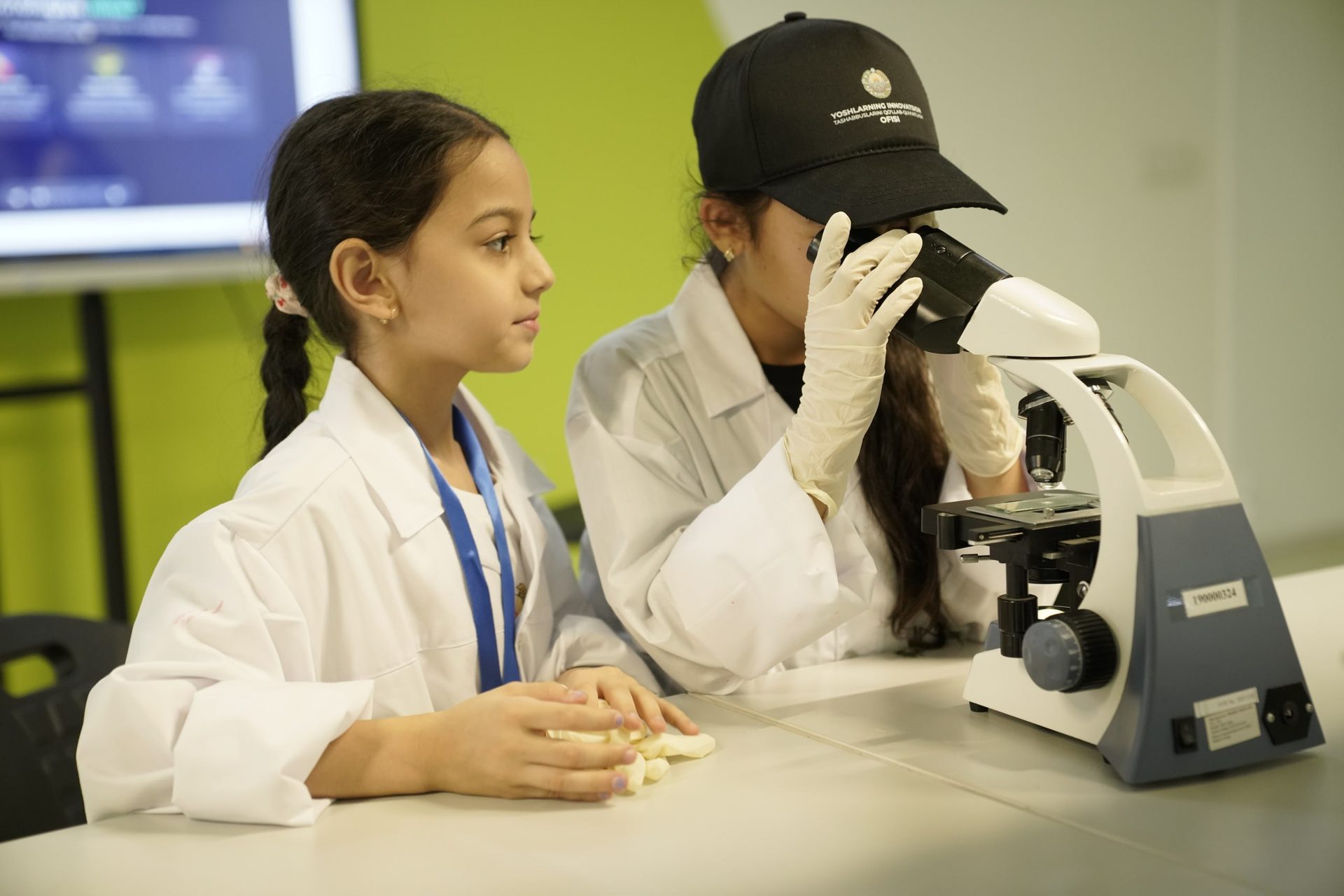
Biotechnology lab
Lab experiments and hands-on natural science.
Robo-football tournament
Teams competed with their robots; the winners were awarded.
Building Wall-e
Assembling the famous cartoon robot with a mentor.
04day
4 July, Saturday
Aviation and drone technologies day
A first step into the sky: model rockets, mini-drones and a festive finale.
Model rocketry
Building and launching a model rocket outdoors.
Flying Tiny Whoop drones
Mini-drone piloting practice; the groups swapped after lunch.
Awards ceremony
A recap video, congratulations and awards for the most active participants.
Certificates
Every participant who completed the programme received a certificate.
How programme time was spent≈36 hours
57%17%26%
Practice and competitions≈20,5 h
Shows, visits and ceremonies≈6 h
Meals, sport and logistics≈9,5 h
Hands-on hours by dayhours
01 · Robotics3,5h
02 · 3D and laser4h
03 · Biotechnology7,5h
04 · Aviation and drones5,5h
Calculated from the daily schedule. Day 3 was the most hands-on: the lab, robo-football and building Wall-e.
Photo story
Day by day: the camp in pictures
From the opening ceremony and physics show to the production floor and the biotech lab — every day in its own frames.
01
1 July, Wednesday
Robotics day
11 photos
02
2 July, Thursday
3D modelling and laser technologies day
9 photos
03
3 July, Friday
Biotechnology and science day
4 photos
Photo album
The camp in pictures
Labs, classes and first inventions — moments from the four-day camp.
Page1 / 5
Drag a page corner, use the arrow keys or the thumbnails below to turn pages.
03Team and venues
12 mentors, 7 venues, one goal
Classes were led by technopark engineers and experts from education companies and universities; each track ran in its own lab.
Mentors by track
4
CoordinatorsResponsible for the schedule, safety and contact with parents.
3
3D and laser fabricationSpecialists from the INNO technopark production department.
1
BiotechnologyA specialist from the technopark biotechnology lab.
4
Robotics, aviation and dronesAn education company founder, technopark and defence-industry engineers.
Organisations represented by the mentors
Youth Innovation Initiatives Support Office
INNO technopark
“Robotics Kids” education company
Innovative Technologies Centre of the Defence Industry Agency
Youth Academy of Tashkent State Medical University
“TashTech” technical university
Turin Polytechnic University in Tashkent
Camp venues
2 Talabalar shaharchasi, Olmazor district, Tashkent
Robotics room1–2 July
3D technologies room1–2 July
Production floor2 July
Biotechnology lab3 July
Aviation and drone lab4 July
Technopark amphitheatreOpening, shows and finale
Turin Polytechnic UniversityVisit, 2 July
Care and safety
Each volunteer looked after 5 children
Lunch and an afternoon snack every day
All participants wore the camp uniform
A safety briefing before every hands-on session
An introductory meeting for parents on day one
Daily attendance and accompaniment home
04Results
Four days later
Beyond knowledge, the camp gave children the experience of making things themselves — and opened the way to new competitions.
In numbers
40certificates awarded
4technology tracks
3hands-on kits taken home
7labs and venues
Expected impact
Greater interest among young people in engineering and science
A pool of gifted pupils guided to further programmes
Programme quality assessed through a participant survey
A proposal to hold the camp every year
Young engineers, on to bigger contests
Camp participants can later test their ideas at the “Engineers of the Future” competitions and festival.

 O'z
 Ру
 En